
Let’s Talk About IR Curing for Wafers
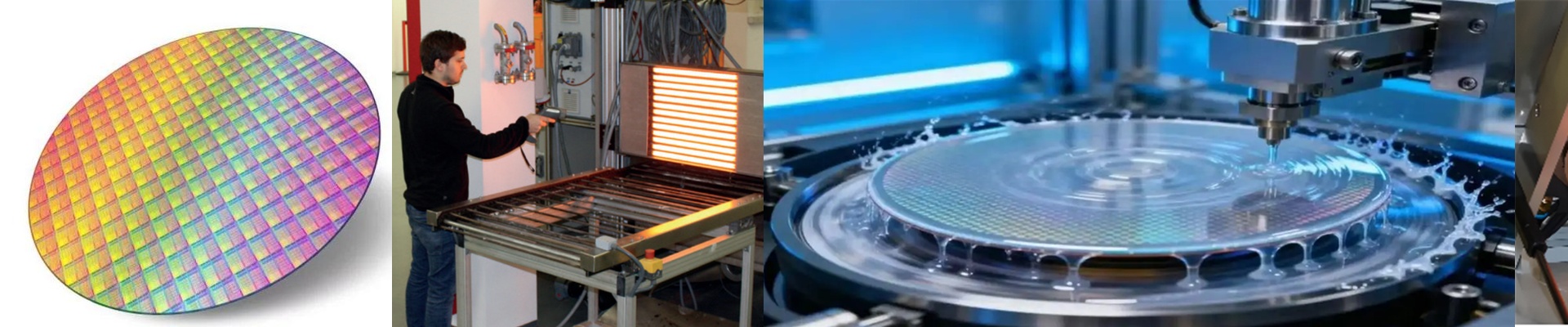
If you’re working with lead-free semiconductor fab, you already know that drying and curing can be a headache. That’s why most of us have moved over to Infrared (IR) curing. Think of it like this: a convection oven is like trying to warm up a room with a space heater—you have to heat all the air first. IR is more like stepping into the sunlight. The energy goes straight from the lamp to the wafer surface. No chemical solvents, no wasting massive amounts of gas. Just direct heat.
How the energy actually moves
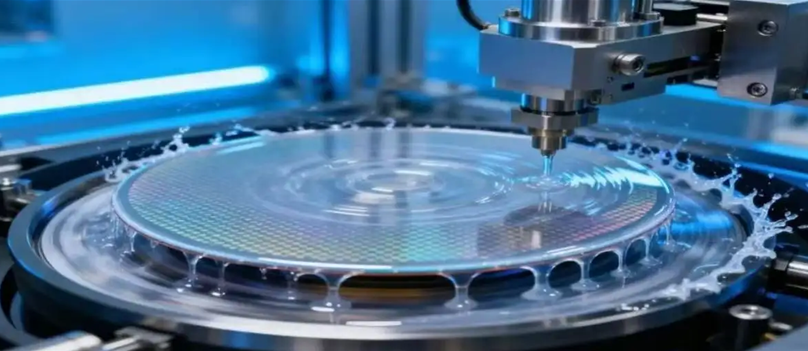
We use short-wave and medium-wave emitters because they hit the exact spots where the photoresist or adhesive absorbs heat. The best part? The heat doesn’t just hang around in the chamber. It hits the substrate and turns into thermal energy instantly. It’s a much cleaner way to work. You aren’t burning through kilowatts just to heat up a giant steel box when all you actually need to warm up is a 300mm wafer.
The balancing act: Distance and Density
Here is where it gets tricky. The gap between your lamp and the wafer determines your power density. Get them too close? You’ll scorch the edges of the wafer or, worse, end up with thermal stress fractures. But if you push them too far back, your cycle times start to crawl. We spend a lot of time dialing in the focal lengths to make sure the heat is spread evenly across the whole surface. Since lead-free solders have higher melting points than the old leaded stuff, you need those high-wattage lamps to get the temp up quickly.
The catch (because there’s always one)
Fast curing is great, but it puts a real strain on your gear. You can’t just plug these machines in and forget about them. The heat density needed for lead-free standards is intense. If you don’t have a solid cooling manifold for the lamp housing, your reflectors will warp and your wiring will eventually fry. Without a decent cooling setup, your lamps are going to die way sooner than they should. It’s a simple trade-off. You get rid of the toxic emissions and shrink your energy bill, and in return, you just have to keep an eye on your cooling. It’s a much better way to handle things than relying on those old, clunky heating elements.